
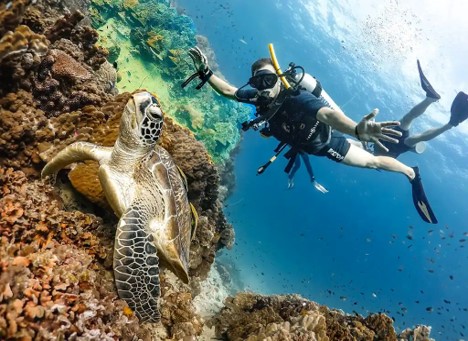
Scuba diving offers a unique opportunity to explore a world that few people experience firsthand. Beneath the surface lies an environment filled with vibrant marine life, colourful coral formations, and fascinating underwater landscapes. Whether you’re a complete beginner or an experienced diver looking for your next adventure, scuba diving provides an unforgettable way to connect with nature.
For many travellers, experiencing the underwater world is one of the highlights of their trip. With proper preparation and guidance, scuba diving can be both safe and rewarding, allowing participants to discover marine ecosystems from an entirely new perspective.
What Is Scuba Diving?
Scuba diving is an underwater activity that allows divers to breathe beneath the surface using a self-contained underwater breathing apparatus (SCUBA). Divers wear specialised equipment that enables them to remain underwater for extended periods while exploring reefs, marine habitats, shipwrecks, and other underwater attractions.
Unlike snorkelling, which keeps participants at the surface, scuba diving allows people to descend deeper and observe marine environments up close.
Why Scuba Diving Is So Popular
Scuba diving continues to attract adventure seekers, nature lovers, and travellers from around the world for several reasons.
Close Encounters with Marine Life
One of the biggest attractions of scuba diving is the opportunity to observe marine creatures in their natural habitat. Depending on the location and season, divers may encounter:
- Tropical fish
- Sea turtles
- Rays
- Reef sharks
- Dolphins
- Giant clams
- Colourful coral species
Every dive offers a unique experience because marine environments are constantly changing.
A Sense of Adventure
Exploring underwater landscapes creates a sense of excitement and discovery that few other activities can match. Many divers describe the experience as peaceful, immersive, and unlike anything else they have encountered.
Learning New Skills
Scuba diving involves developing skills related to buoyancy control, underwater communication, equipment use, and environmental awareness. Many people enjoy the challenge of learning and improving these abilities over time.
Is Scuba Diving Suitable for Beginners?
Yes. Many diving experiences are specifically designed for beginners with no prior experience.
Professional instructors provide guidance on:
- Equipment use
- Basic safety procedures
- Underwater communication
- Breathing techniques
- Entry and exit methods
Introductory dive programs allow participants to experience scuba diving under close supervision before deciding whether to pursue formal certification.
Essential Scuba Diving Equipment
Several pieces of equipment work together to ensure a safe and comfortable diving experience.
Diving Mask
A mask allows divers to see clearly underwater and protects the eyes from direct water exposure.
Regulator
The regulator delivers breathable air from the scuba tank, allowing divers to breathe normally beneath the surface.
Buoyancy Control Device (BCD)
The BCD helps divers control their position in the water and maintain comfortable buoyancy throughout the dive.
Scuba Tank
The tank stores compressed air used during the dive.
Fins
Fins improve movement efficiency and reduce energy expenditure while swimming underwater.
Wetsuit
A wetsuit helps regulate body temperature and provides protection from environmental conditions.
Safety Tips for First-Time Divers
Scuba diving is generally very safe when proper procedures are followed.
Before participating, consider the following recommendations:
Listen to Your Instructor
Professional dive instructors provide important safety information and guidance. Following their instructions is essential throughout the experience.
Never Hold Your Breath
Divers should breathe continuously and calmly while underwater. Holding your breath can create safety risks during ascent.
Stay Within Your Comfort Level
Beginners should avoid pushing beyond their skill level and always communicate any concerns to their instructor.
Equalise Early and Often
Pressure changes can affect the ears as divers descend. Learning proper equalisation techniques helps prevent discomfort.
Respect Marine Life
Marine animals should be observed from a respectful distance. Avoid touching coral, feeding wildlife, or disturbing underwater habitats.
Why Cairns Is One of the World’s Leading Diving Destinations
Cairns has earned a global reputation as one of Australia’s premier scuba diving destinations. Its proximity to the world-famous Great Barrier Reef provides access to some of the most diverse marine ecosystems on the planet.
Divers visiting Cairns can enjoy:
- Extensive coral reef systems
- Exceptional marine biodiversity
- Clear water conditions
- Professional dive operators
- Suitable dive sites for beginners and experienced divers
The region attracts thousands of diving enthusiasts each year who come to experience one of the world’s most remarkable underwater environments.
What Can You Expect During a Dive Trip?
While every dive experience varies, most guided diving trips follow a similar structure.
Participants typically receive:
- A safety briefing
- Equipment fitting and instruction
- Basic skills training
- Guided underwater exploration
- Post-dive debriefing
Professional operators focus on ensuring participants feel comfortable and confident throughout the experience.
How Scuba Diving Supports Environmental Awareness
Many divers develop a deeper appreciation for marine conservation after witnessing underwater ecosystems firsthand.
Healthy oceans play an important role in supporting biodiversity, tourism, and environmental balance. Responsible diving practices help protect coral reefs and marine species for future generations.
Many dive operators also support conservation initiatives through education, reef monitoring programs, and environmentally responsible tourism practices.
Is Scuba Diving Worth Trying?
For anyone interested in adventure, wildlife, and exploring the natural world, scuba diving offers an experience unlike any other. The combination of breathtaking underwater scenery, fascinating marine life, and the excitement of discovery creates memories that often last a lifetime.
For those considering scuba diving in Cairns, there are opportunities available for both beginners and experienced divers to safely explore some of the most spectacular underwater environments in the world. With professional guidance and proper preparation, a scuba diving adventure can become one of the most memorable experiences of any trip.
FAQs
1. Do I need previous experience to try scuba diving?
No. Many introductory scuba diving programs are specifically designed for beginners and include training from qualified instructors.
2. Is scuba diving safe for first-time divers?
Yes. When conducted with professional supervision and proper safety procedures, scuba diving is generally considered a safe recreational activity.
3. What should I bring on a scuba diving trip?
Most operators provide essential diving equipment. Participants should typically bring swimwear, a towel, sunscreen, water, and suitable clothing for the day.
4. How deep do beginner scuba dives usually go?
Depth limits vary depending on the program and local regulations, but beginner dives are generally conducted at relatively shallow depths under instructor supervision.
5. Can I scuba dive if I can’t swim very well?
Requirements vary between operators. Some introductory experiences may allow participation with basic water confidence, while certification courses often have swimming requirements.
6. What marine life might I see while scuba diving?
Depending on the location and season, divers may encounter tropical fish, sea turtles, rays, coral formations, reef sharks, and many other marine species.
This article has been supplied by Adrian Garner – adriangarner2133@gmail.com